Video: https://youtu.be/jztwpsIzEGc?si=dlpOjyqiIEA_kSeI
| Title | Testing the accuracy of an image recognition model |
| Abstract | This experiment tests how well a machine learning model can recognize images. The goal is to see if a pre-trained image recognition model can correctly identify different objects. The experiment involves feeding images into the model, recording its predictions, and calculating the accuracy. The results show that the model performs well on clear images but struggles with low-quality or unfamiliar images. |
| Introduction | Image recognition is an important area of artificial intelligence. Many applications, such as facial recognition and self-driving cars, rely on accurate image detection. This experiment tests a machine learning model’s ability to correctly classify images and identifies its strengths and weaknesses( AI Experiments, 2023) |
| Material and Methods | Materials: Pre trained image recognition model (e.g., Mobilenet or RasNet)Computer with python installedDataset of 50 images(animals,objects,faces) Methods: Load the pre-trained modelFeed 50 images into the model one by oneRecord the model’s predictions.Compare predictions with the actual image labels.Calculate the accuracy as: Accuracy= (Correct Predictions/total images) * 100 |
| Results | The model correctly identified 42 out of 50 images, giving an accuracy of 84% ( AI Experiments, 2023) Common errors: Misidentified blurry or low-resolution imagesConfused similar looking objects (e.g., cats and small dogs)Struggled with images taken from unusual angles. |
| Lab Report Continued | |
| Discussion | The results show that the model works well in most cases but has limitations. It performs best when images are clear and similar to what it was trained on. The model struggles with low-quality or unfamiliar images, which highlights a key challenge in machine learning- generalization. In real world applications, improving training data and refining models can help increase accuracy ( Smith, 2022) |
| Conclusion | This experiment demonstrates that image recognition models can be highly accurate but are not perfect. More training with diverse images could improve performance. This research is important for developing AI systems that rely on visual data. |
| Acknowledgements | Special thanks to open-source machine learning communities for providing pre-trained models. The experiment was inspired by various YouTube demonstrations of AI image classification. |
| Group Members: | Dario Haxhia |
| Catherine Clemente Cruz | |
| Jayden Santos | |
| Halima Sadia | |
| Of the following YouTube Channels, which one did your group decide: MythbustersVeritasium’s YouTube Channel (Science Experiments Playlist)Practical Engineering’s YouTube ChannelAdam Savage’s Tested YouTube ChannelThe King of Random YouTube ChannelMark Rober…former NASA EngineerMichael Reeves…Self Taught Engineer who conducts experiments in his garage | Mark Rober…former NASA Engineer |
| Video Link here in Hyperlink Form | |
| From the channel you chose, each member should find and pick a video that they would hope to do a lab Report on: | Dario: This Robot Eats Trash https://www.youtube.com/watch?v=pXDx6DjNLDU |
| Catherine: Testing The World’s Smartest Crow https://www.youtube.com/watch?v=tpg3VvoIVfA | |
| Jayden: Lasers vs Lightning- Which Is More Powerful? | |
| Group Member Name 1 Halima: Amazing Invention- This Drone Will Change Everything | |
Phase 3 – Lab Report Presentation
Jayden Santos
Dario Haxhia
Catherine Cruz Halima Sadia

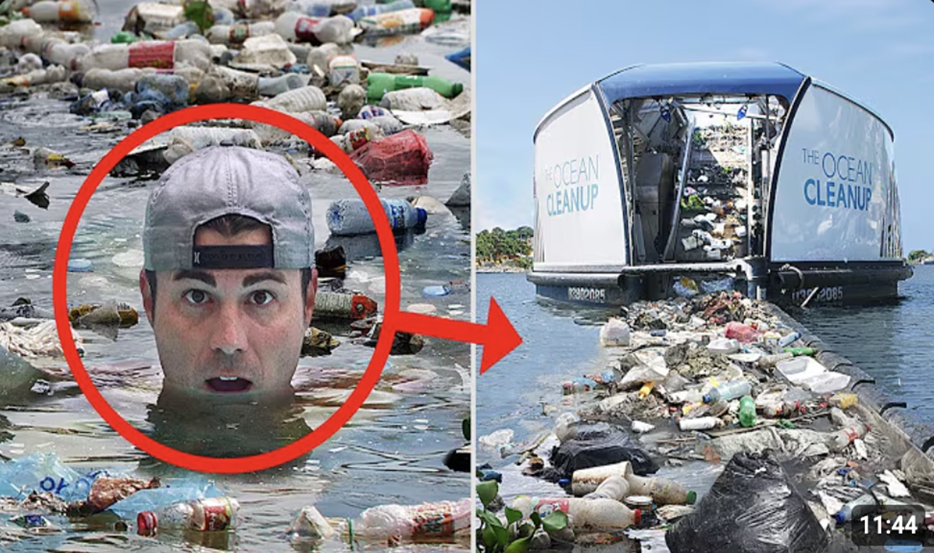
Introduction “This Robot Eats Trash
Background Principles
How does this experiment relate to the field of engineering?
●This experiment specifically the machines involved revolve around many different types of engineering, since many of them are used to build this type of machine.
●Such as:
-Robotics
-Mechanical
-Environmental
-Computer
Engineering concepts involved:
•There are many different types of engineering involved along with concepts like:
-Problem Solving
-Optimization
-Sustainability
Experimental Design and Methodology
Trash collection competition
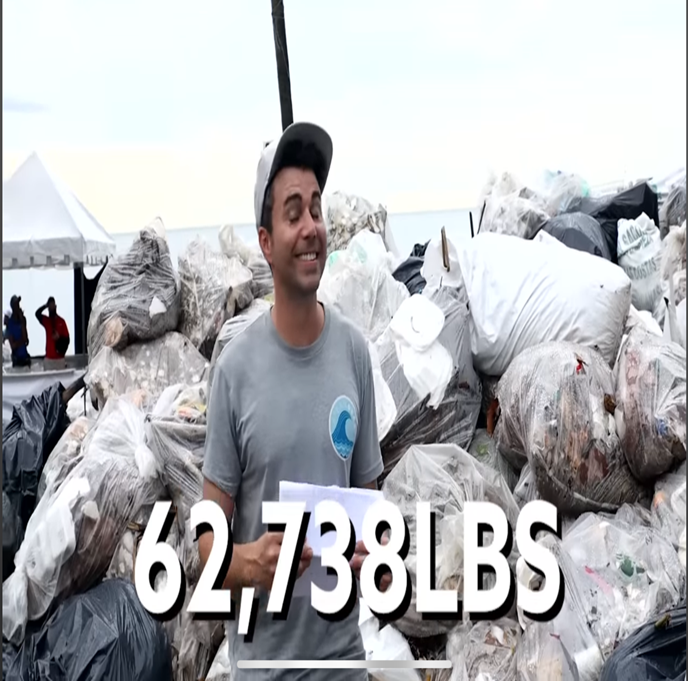
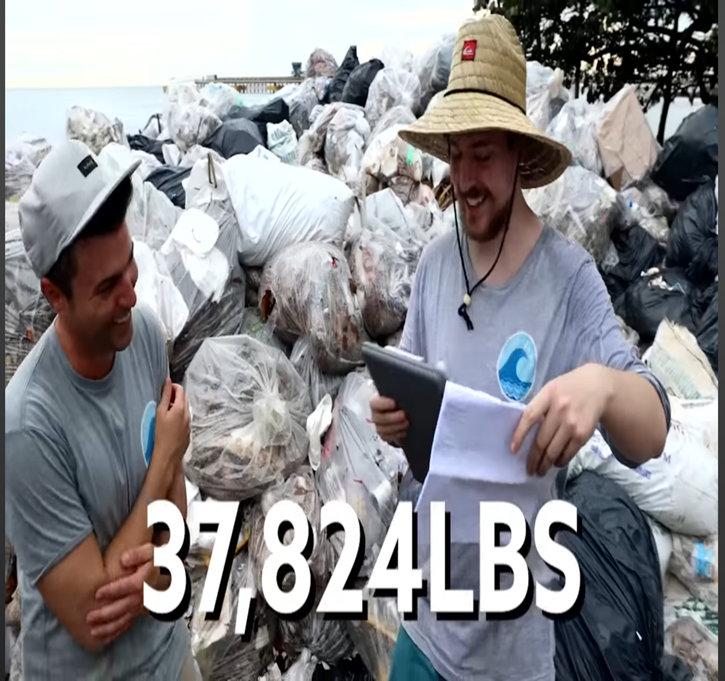
Mr. Beast (manual labor) vs Mark Rober (semi-autonomous labor)
Focus: cleanup effectiveness of semi-autonomous labor vs. manual labor.
Both teams collected trash in the same neighborhood in the Dominican Republic. Beach cleanup vs. River cleanup
Performance was evaluated by comparing the number of pounds of trash that each team collected given the same time-frame.
Mr. Beast (Manual)
-100+ Volunteers
-Hand tools (bags, shovels)
Mark Rober (Automated)
The Interceptor:
-Solar-powered
-Floating barrier
-Conveyor-belt
-Floating dumpsters
-Boat
-AI
-Local government employees (10)
Results and Performance Metrics
Conclusion
The trash eating robot is a groundbreaking solution in the field of engineering. It successfully automated waste collection, sorting and compaction, using advanced technology like sensors and machine learning.
This project showcases how robotics can play a key role in addressing environmental challenges. It pushes the limits of how we can use technology to create more efficient and sustainable waste management systems.
The robot directly solves the problem of waste sorting by doing it automatically, reducing the burden on humans and improving recycling efforts. It’s a step forward in making waste management more efficient and environmentally friendly.
Future Directions
The findings show that although autonomy makes things easier, human adaptability and knowledge can still triumph.
Rather than dropping one method over than other, a hybrid between automated and manual labor can be effective, especially in circumstances like our video.
In cities, workers could manually collect trash from tight spaces or hard-to-reach areas, while robots handle streets or beaches with minimal obstacles.
Big Idea/Engineering Principle
Design sustainable solutions to solve real-world problems
Take advantage of the circumstance/environment

This entry is licensed under a Creative Commons Attribution-NonCommercial-ShareAlike 4.0 International license.

